

This post may contain affiliate links, which means I may earn a commission for my recommendations at no additional cost to you. By browsing this website, you agree to our privacy policy and terms of use.

Learning how to meal plan the right way is a very important step in saving money on groceries. In this thorough guide, I'll teach you how to meal plan every week and save hundreds of dollars while doing it.

If you've avoided meal planning because you think you'll have to spend your entire weekend planning and meal prepping, I have good news. My method includes ZERO meal prepping sessions and no couponing (say goodbye to spending Saturday morning chopping vegetables and clipping coupons) and will take you just 30 minutes every week once you're organized.
This meal planning method is the same method I teach in my 30-Day Grocery Savings Challenge and is the same method I used to pay off $70k of student loan debt in 27 months. It's truly the best way to lower your grocery bill without spending your entire weekend meal planning.
Step 1: Inventory Your Fridge, Freezer, and Pantry
The first step in effective meal planning is taking stock of what you already have and organizing your space. This can be time consuming if you've never done it before, but a budget-friendly meal plan is always planned around what you already have on hand.
The more organized you are, the better! This not only helps you avoid buying duplicate items, but prevents food waste and keeps your grocery list as short as possible (the ultimate goal!). Take a weekend or two and work your way through your fridge, freezer, and pantry. You won't be sorry you're starting off with a clean slate!
Fridge
Start by cleaning out your fridge. Remove items that are expired or spoiled. Then, categorize the remaining items by grouping like items together. This will give you a clear view of what needs to be used up.
Freezer
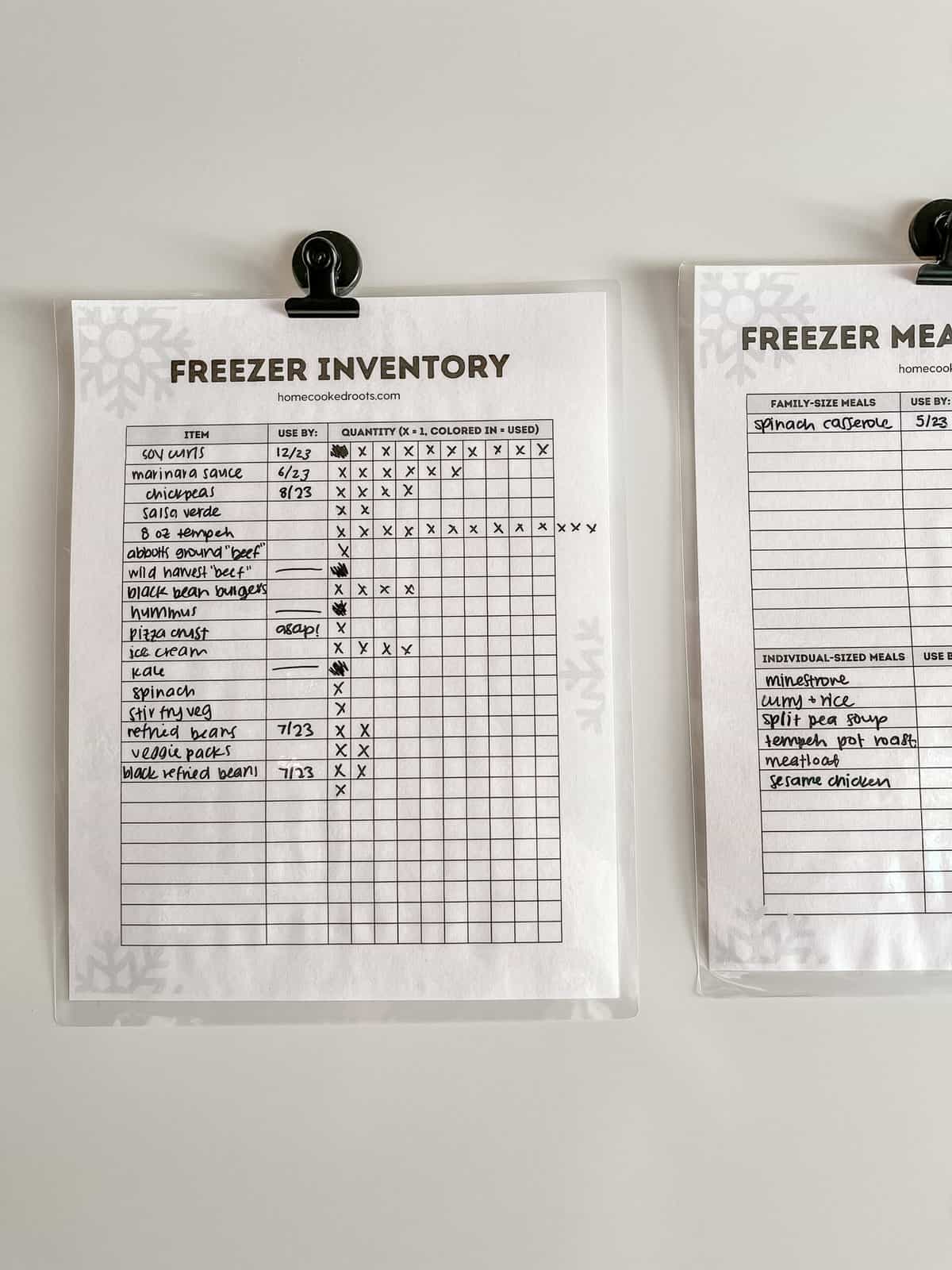
Next, move on to your freezer. Organize it by food type—proteins, vegetables, fruits, homemade freezer meals, etc. Label and date items if they aren’t already, then use my Free Printable Freezer Inventory Sheets to stay organized week over week.
Pantry
Finally, and perhaps most daunting, inventory your pantry! Check out my best tips for How to Organize a Pantry and my favorite Pantry Storage Containers to help keep it that way.
Step 2: Highlight items that are expiring or need to be used up ASAP
Once you've organized your kitchen and implemented organizational systems to help keep it that way, week to week maintenance should be much lighter.
Moving forward, all you'll need to do is quickly glance in your fridge, freezer, and pantry and make a list of items that are nearing their expiration dates or need to be used up soon.
I like to call this my ASAP list.
Use this ASAP list as a starting point for brainstorming your meals for the week. For example if you have half a jar of salsa and a bunch of cilantro that needs using up, a taco night or Mexican recipe would be perfect!
Step 3: Make a meal plan formula
A meal planning formula is a structured approach to planning weekly meals by assigning specific themes or types of dishes to each day of the week. This method simplifies meal planning, allows for variety, and makes grocery shopping more efficient. Here's my favorite meal planning formula:

SUNDAY
Slow Cooker Recipe
If you don't have time to start something in the morning, do an Instant Pot recipe at night.
MONDAY
Meatless Monday
Going meatless at least once a week is a great way to lower your grocery bill every week!
TUESDAY
Taco Tuesday
On Tuesdays I like to make tacos or any of our favorite Mexican-inspired dishes.
WEDNESDAY
One-Pot or One-Pan
Think of your favorite Instant Pot, one-pot, or sheet pan dinners! You can even do a second crockpot.
THURSDAY
Leftovers
Clean out the fridge and reheat or make something with leftovers. As my grandpa says, if it's in the fridge, it's for dinner.
FRIDAY
Freezer Meal
Treat yourself to a night off cooking with what I like to call Freezer Friday!
SATURDAY
Wild Card
Today's the day for more leftovers, a freezer meal, trying a new recipe, eating out…you choose!
Download your Free Meal Planning Template designed with this formula in mind.
Step 4: Meal plan with these 5 Rules
First things first, if you haven't already, go back to my post on How to Make a Recipe Binder and put together a collection of your family's top 20-30 dinner recipes. These should be recipes that the entire family has given 5 -stars and already likes to eat on a regular basis.
You'll use this binder every week in combination with your ASAP list to meal plan QUICKLY. Or, on the off chance that the recipes in your binder don't sound good or work with what you have, try using AI to Make a Custom Meal Plan based on what you have on hand!

Now on to the 5 meal planning rules:
1. Plan no more than 4-5 dinners per week.
I've been meal planning to save money for almost a decade now, and shopping for 4-5 dinner recipes is the sweet spot. Any more than this and I find myself overwhelmed and wasting food. If you have an extra busy schedule, I might suggest just 3 dinners, then fill in the gaps with leftovers and/or homemade freezer meals!
2. Pick recipes that require you to buy no more than 4 new ingredients
If you have stocked the pantry essentials and freezer essentials that align with the recipes in your recipe binder, this should be fairly easy to do.
For an example, one of my family's favorite recipes in our recipe binder is Orange Tofu. I almost always have soy sauce, vegetable oil, cornstarch, sugar, rice vinegar, garlic, white rice, and the necessary spices on hand. This means on any given week, I usually only have to buy extra firm tofu, oranges (to make orange juice), and green onions for serving.
By meal planning this way, you will greatly minimize the number of ingredients you need to buy, and in turn minimizing how much you spend. Then, with the leftover budget, you can stock up on your pantry essentials to ensure you don't run out!
3. Eat Leftovers for Lunch
This won't be popular with my leftover haters, but eating leftovers is a part of life. Especially if you're in it to save money.
So plan to eat each meal you cook once for dinner and at least once more for leftovers. It makes packing homemade lunches so much easier!

4. Eat the Same Breakfast Everyday
Likely just as unpopular as eating leftovers for lunch, but eating the same breakfast every day simplifies life, meal prep, and ultimately saves money.
If this doesn't work for you, I recommend making a few freezer-friendly breakfasts and defrost what sounds good each morning. This will give you versatility while keeping the cost and week-to-week kitchen prep down.
Here are our top 5 budget-friendly breakfasts we rotate through pretty much indefinitely. All of them, aside from the oats are freezer-friendly:
- Overnight Oats or Oatmeal Bake
- Freezer Breakfast Sandwiches (my husband really likes these)
- Freezer Breakfast Burritos (recipe coming soon)
- Oatmeal Muffins or Almond Flour Muffins
- Pancakes

5. Check the Money Saving Apps (Optional)
Flipp and Ibotta are two of my favorite money saving apps that I use specifically to save money on groceries. It's usually just $0.50 or $1 cash back or so on each item, but these small amounts add up overtime. Last year I saved over $100 on items I was already buying by using Ibotta.
Step 5: Make a List of Non-Perishable Staples You're Running Low on
Once you have your meal plan, make a list of non-perishables you are running low on. I like to list this in order of most needed to least needed. This can include pantry staples, freezer staples, household essentials, and long term storage foods.
Then, if you are under budget, use the rest of your grocery budget to stock up on these items in order of need (bonus points if they are on sale or have cash back on Ibotta!).
I do a lot of my week to week grocery shopping online at Walmart. This makes it really easy to know how much my weekly meal plan will cost and how much I have leftover to buy staples at Costco with.
If you shop in person, consider keeping track on your phone calculator as you go so you know how much you have left.
Bonus: Grocery Shop the Smart Way
Next, make your grocery shopping list and read through my article on How to Grocery Shop efficiently for even more tips on How to Save Money on Groceries. Spoiler: If you're not shopping at the Cheapest Grocery Stores, you're likely spending more than you need to!
Finally, don't forget to download your free Weekly Meal Planning template! Happy saving.
FAQs
What do I do if I don't have a well-stocked pantry?
If you're just starting out on your home-cooking journey, your pantry may be on the leaner side. If that's the case, make your recipe binder and fill it with 20-30 recipes that you like to eat.
Look over the collection of ingredients and identify the most common ingredients. Use this as a guide to determine which ingredients you should stock up on and slowly buy them in multiples every week until you have a good pantry to work with.
If you are on a really tight budget, check out my post: How to Stock a Pantry for $100 in 2024.
How much should I spend on groceries every week?
This will vary widely depending on your location, family size, and dietary preferences or needs. To help determine a good budget that makes sense for you, read my post How Much Should I Spend on Groceries? It's a really helpful guide.
Are meal kit delivery services a good way to save money on groceries?
The short answer is that meal kit delivery services like Hello Fresh, Blue Apron, Purple Carrot, and Home Fresh will never be cheaper than cooking on your own (unless you have a crazy good coupon).
The long answer: These meal services are actually very expensive compared to home cooking. Think about it. These are for profit companies. They are not only passing the cost of the ingredients on to the consumer, but all of the costs involved in running a company, plus a fee for convenience.
With this being said, this does not mean they never make sense to use. If you are currently accustomed to eating out several nights a week, utilizing a meal kit delivery service is a step in the right direction and will save you money.
As you get more comfortable eating at home, you can slowly learn how to cook from scratch and save even more.
So think of it as a sliding scale: cooking from scratch > convenience foods at the grocery store > meal kit services > fast food > restaurants.








This is really helpful, thank you.